
Luxury Grocery Stores
What does luxury mean?
Why is it that people are willing to spend $20 on a smoothie, $19 for a single strawberry, or $60 on an Orange Juice?
My team sought to discover what luxury means to grocery shoppers through 6 different interviews, while practicing generative research skills.
Project
Year
Research / Team Project
Duration
2025
Skills
7 Weeks
Research / Laddering / Generative Research /
Interviewing / Documentation
**All externally sourced images are used for instructional purposes only, and all intellectual property rights remain with their original owners.
**Images on this page are for demonstration purposes only in a non-profit educational context. They do not represent or endorse actual products or services of Erewhon or Whole Foods.
Over the past 5 years, we've seen a certain fascination and prevalence in a new player in luxury...
A New Wave of Luxury Grocery Stores


What Does Luxury Mean?
THESIS
Research Objective Statement
Preliminary Research
WGSN: Case Study / Trend Report
Erewhon's Cult Status

$10.6M
Earnings from a Smoothie
40,000 Hailey Bieber smoothies are sold per month, with it earning them $10.6m last year.
6.4%
CAGR (2025-2030)
Global Food Market's Projected Growth.
$900,000
Weekly Sales
The original location's weekly sales increased to $900,000 when Josephine Antoci and her husband, Tony, acquired the brand.
Emerging Trend: Monitoring for Future Potential
"Erewhon’s significance in culture reflects consumers’ shift in spending, from material goods to aspirational credentials, and a change in desire from signalling wealth via luxury clothing to luxury wellbeing."
• "Intentionally curated, high-quality offerings, a diverse product range, focus on community and affluence over democratisation have turned the brand into a rapidly expanding designer grocery store."
• Today, Erewhon sells only organic, natural, locally sourced, wellness-forward curated fare at aspirational prices and has status and recognition similar to a luxury fashion brand, fuelled by celebrity patrons and influencer attention.
•Transform the mundane into the sublime, building trust through a curatorial, choice-first approach.
• Prioritise community and exclusivity as well as establishing cultural cachet through cross-industry collaboration

Generational Spending

$23 tn
Consumer Spending
Gen X is set to lead global consumer spending, with it forecast to reach $23tn by 2035
25%
Healthier
The majority of Americans, given the choice, would rather be 25% healthier than live 25% longer.
90%
Needs
90% of US Boomers rank comfort and relaxation as top three experiences they seek when eating
Emerging Trend: Monitoring for Future Potential
• "Boomers and Gen X will prioritise food and drink products, services, and experiences that will enrich and simplify their downtime and retirement."
• "Brands that help both generational groups balance tradition and familiarity with newness and convenience will resonate, placing value on time saved and quality."
• Help individuals target their specific needs and meet their personal health goals with functional foods and supplements.

Generative Research
Preparation
To
Understand
• Guided Tour
• Dixit Cards
• Archetype Cards
• Experiences
• How they think the
world sees them
• How they see the world,
How they see themselves
The Methodology and Why:


Experience
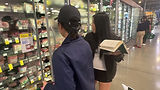
First, we started with a guided tour. The interviewee guided us through their shopping routine, showing the products they usually buy and sharing the special meaning or reason behind each choice.
Guided Tour

How they think the
world sees them
Second, we used Dixit cards with the question: “How does the world see you when you are shopping at this grocery store?” The participant picked two cards and explained why they chose them.
Dixit Cards

How they see the world,
How they see themselves
Last, we used archetype cards with the questions: “How does the world see you?” and “How do you see yourself?” The participant also chose two cards and explained their choices.
Archetype Cards
ParticipantS
We recruited our participants using the specs shown below:
*All Participants Provided Signed Consent for Photographic Content

Sunjoo A.
• Shops at Erewhon weekly
• Strong priority in diet and nutrition
• Believes in paying for quality

Laura L.
• Shops at Whole Foods weekly
• Strong priority in nutrition and quality
• Believes in paying for value

Sophia L.
• Shops at Whole Foods weekly
• Strong priority in health, wellness, and nutrition
It's a way to romanticize life

Hannah A.
• Shops at Erewhon weekly and is a fan of the store
• Strong priority in health
It’s an experience, not just a store

Evan H.
• Shops at Whole Foods weekly
• Strong priority in health, wellness, and nutrition
• Believes in paying for value
Expert
We recruited a Whole Foods team leader as our expert to answer any questions we might have as an observer.

Rebekah J.
Whole Foods Team Leader
• Leader
• Understands the values and mission of the store
• Regularly sees different customers and recognizes behaviors
Generative Research
Recap
The Interviews


Laddering Sample
Analysis and Insight
Diagrams
Luxury is an experience.
But what is the Luxurious Experience?


Analysis and Insight
Themes
Our team identified 5 themes of what specifically gives our grocery stores their established luxury reputation: Status, Culture, Social, Emotion, and Replication. These themes are the foundation of our luxurious experience and reveals insight to how these stores were intentionally designed.
01. Status
02. Culture
03. Social
04. Emotional
05. Replication
01. Status
Wealth Gap
The Elite and Affluent
Publicity
Luxury Lifestyle
Symbolic Branding

The wealth gap has never been greater than that of today. Furthermore, our access to the internet and media has allowed people to glimpse a vast array of lifestyles, especially those of the top 10%.
It's no surprise to know that what we consume affects our desires, opinions, and behavior, and the exposure to what comes with this lifestyle led to something really interesting: luxury as a goal, desire, and aspiration.
Public displays of status and materialism have left us wanting more.
Stores such as Erewhon and Whole Foods allow people to experience a sliver of this lifestyle, drawing people in. Erewhon in particular sells merch and branded goods that are highly marked up to reflect their luxury. Being seen with these items in public gives an impression or a status that the individual can afford these luxuries.
01. Status
02. Culture
03. Social
04. Emotional
05. Replication
Key Word:
Exclusivity

Designed and curated for the elite, desired by many.
When we talk about exclusivity in luxury grocery stores, it stretches beyond price towards access and curation. These spaces are designed for an elite standard of living, but they’re desired by many. Exclusivity shows up through knowing what to choose and why it’s better. Shopping becomes a signal of taste and awareness.
Status
Exclusivity

Insight:
There is an increased publicity of the wealth gap to the masses, which distinguishes the elite and affluent, making their lifestyles desirable to the rest of society.
Opportunity:
How might we curate and design for this lifestyle? And how can the experience allow others to take a piece of that exclusivity with them?
02. Culture
01. Status
02. Culture
03. Social
04. Emotional
05. Replication
Consumption
Status
Social media
Health and Wellness
Aesthetics
Economic
Community

These luxury stores were specifically designed around our modern culture and its contexts.
With overconsumption literally consuming our generation, there has also been greater interest and awareness in conscious consumption. Our theme actually embraces both sides of consumption, taking advantage of the need to consume, but allows consumers to feel as if their consumption is an investment, quality, and sustainable. With the rise of Social media, messages are communicated more quickly and to more people than ever before. Erewhon and Whole Foods rely on social media marketing, and there are communities built on these apps. The Health and wellness industry has become its own growing aesthetic and niche, while visual aesthetics, especially minimal and clean aesthetics, have become popular.
As stated earlier, status is a significant driver of interest in these stores. The element of luxury is sought out and desired by many. It became something that is desired and almost like a goal to be obtained.
Our culture is sadly shifting to a culture that is leaving its homes less, reducing interaction, and limiting connection. These stores touch on this by creating communities with their memberships, social media followings, and supporting other communities surrounding their scopes. Not only have they created these communities, but they also plan events where their customers can come together and form relationships with one another.
Key Word:
Extensive

Everything feels top-drawer
For culture, extensiveness is about depth. Luxury grocery stores offer a wide range of options, but everything feels top-drawer. The selection reflects values that these luxury grocery stores uphold, including health, aesthetics, and ethics. Having choices becomes a way customers express identity, so the abundance feels intentional.

Extensive
Culture
Insight:
These stores are honing in on some cultural frameworks of society, specifically, the emergence of social media, consumption culture, health and wellness, aesthetics, and romanticizing success.
Opportunity:
How might we create a tailored experience and space for stakeholders by integrating these contexts within specific niches?
03. Social
01. Status
02. Culture
03. Social
04. Emotional
05. Replication
Community
UGC Marketing
Social media
Stakeholders
Interactions
Influential Leaders

One thing we identified was that a significant reason for the success of these stores is community. Luxury grocery stores are built and dependent on the network of relationships and their interactions. Surrounding them are communities of fans, with their Instagrams collectively sharing 3.7M followers and over 500k videos linked to their brand across all social media platforms. There's a virality around these stores. These stores have ambassadors, both celebrities and influencers, who promote the experiences and lifestyles of what Erewon/Whole Foods offers. Not only that, but they have collaborations with these ambassadors that bring in more customers. One famous collaboration is with Hailey Bieber to create the $20 HaileyBieber Smoothie
However, celebrities and social media influencers are not the only influencers bringing in customers or followers. Within the stakeholders, we have Customers, Brand, Product Brands, Collaborators, and Employees. These stakeholders all interact with and influence one another, and there are leaders within these groups that especially motivate movement within the scope.
Key Word:
Connection

Built on the network of relationships and their interactions
Socially, luxury grocery stores depend on connections built around customers, brands, employees, and collaborators. Influencers and UGC shape trust and perception. People see what others are buying and feel validated in their choices. Shopping shifts from an individual to a more communal activity.
Social

Connection
Insight:
Customers value the sense of belonging that they can experience in the network of relationships within the space of the store and the community it provides.
Opportunity:
How might we enhance the personal experience of the specific shopper in and out of the store through supporting meaningful connections formed through communities?
04. Emotional
01. Status
02. Culture
03. Social
04. Emotional
05. Replication
Romanticization
Feel-Good
Trust
Satisfaction
Desire
Belonging

There's one thing that these stores excel in. The emotion. In their aesthetics, they are incredibly detail-oriented and intentional. Walking through the store, you will notice employees with the sole purpose of ensuring that everything is placed perfectly, brought to the front of the shelves, and restocked. It gives the effect of positively affecting the customer, filling them with feel-good emotions of relaxation, peace, and comfort.
But it's not only their aesthetics. These stores are incredibly strict with their customer service and standards, which allow the customer to continuously experience the best possible experience. These factors bring about feelings of trust and satisfaction. Overall, these feel-good emotions bring about feelings of desire and belonging in the community that the brands support, bringing about loyal customers.
Key Word:
Premium
Premium experiences reflect in premium emotion
The key emotional difference between these stores and non-luxury stores is a premium experience.
Luxury grocery stores elevate everyday shopping into something calm and reassuring. The environment builds trust and reduces decision anxiety. It's a familiar feeling that fosters comfort, which adds meaning beyond just buying food.

Premium
Emotion
Insight:
Premium experiences evoke premium emotions, positioning these stores as third spaces for customers.
Opportunity:
How might we create a personalized experience to evoke positive emotions and feelings which leave lasting impressions?
05. Replication
01. Status
02. Culture
03. Social
04. Emotional
05. Replication
Crafted
Foreign
Novel

The concept of these stores is not new. These stores are crafted to mimic the experience of European markets. But we can wonder... why? Why is there a fascination with these markets?
Americans have a strange interest in other countries. As soon as we hear that something is implemented, trending, or imported from another country, we seem to assume that it's the best of the best. For example, Erewhon specifically has an Orange Juice sold for $60 because the oranges are imported from Japan overnight. But, how much better can these oranges be?
It's Novelty. People desire this because it's something new that they could experience without having to travel to that specific country. Erewhon and Whole Foods want their experience to feel more elevated while adopting the personal experience of European markets. People are drawn to these experiences not only because of their luxury, but also because they are different than the typical American grocery experience.
Key Word:
Crafted

Crafted to mimic the experience for novel and elevated feeling
These stores often draw inspiration from European markets and artisanal experiences. The feeling may not be completely authentic, but itcarefully crafted to deliver the same elevated experience.

Crafted
Replication
Insight:
The experience of a European market is replicated for novel and elevated feeling, making a visit to the store an iconic usage occasion itself.
Opportunity:
How might we create a tailored experience and space for stakeholders by integrating these contexts within specific niches?
LUXURY IS...
Status, Culture, Social, Emotion, and Replication
From everything we learned from our interviews and our own observations, these were our top insights and the opportunities based on our driving themes.
Each of our insights and opportunities ties back to one of our themes, all aimed at maintaining and growing luxury grocery stores. They enhance the experience for all customers, whether it's through the services they offer or the extra attention to detail.
Luxury is a Crafted Experience To Turn Exclusivity and Premium Value Into Connection.
STATEMENT
Concluding Words